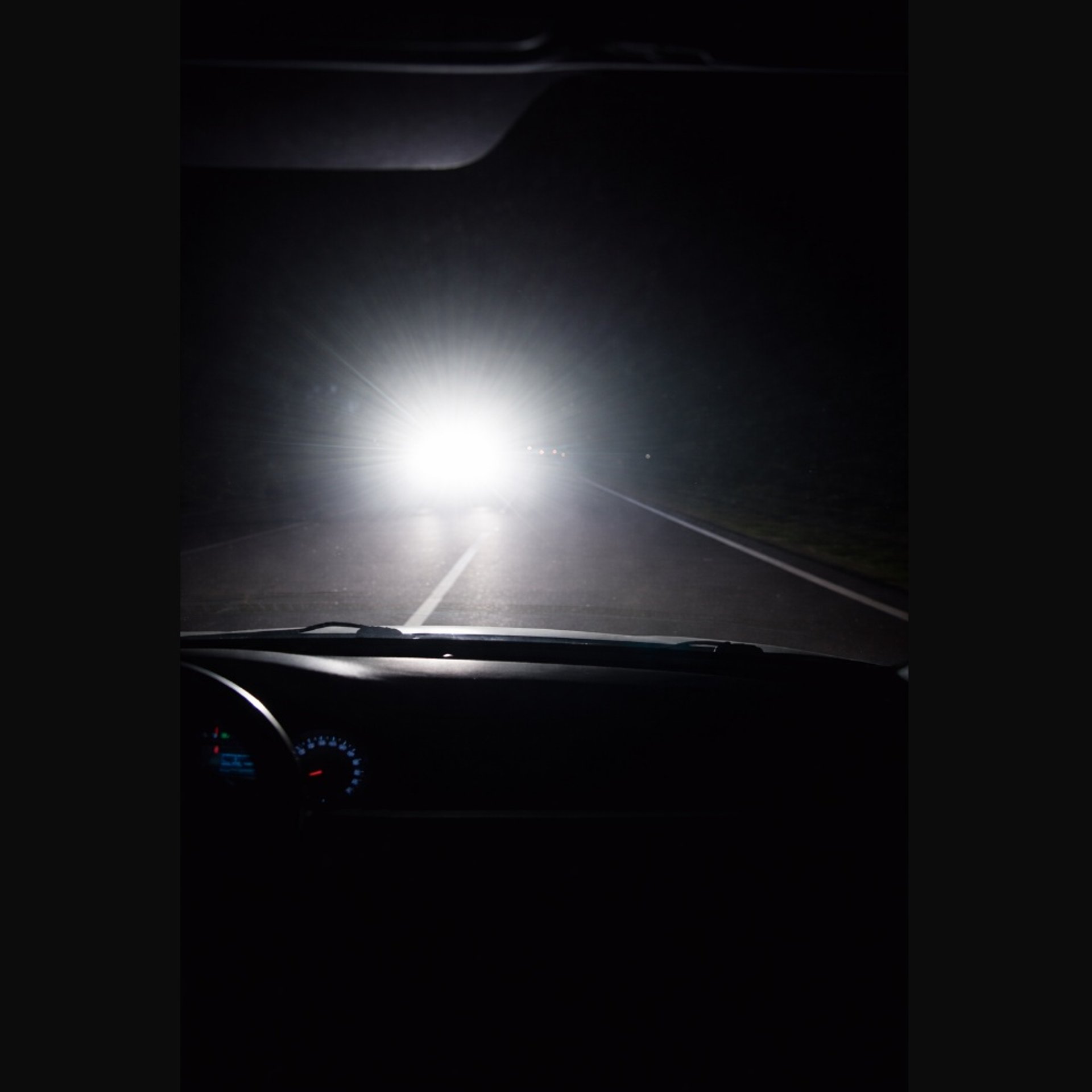
Blinded at Night
What Actually Changed
If driving at night has become harder than it used to be, you’re not imagining it.
Many people describe the same experience:
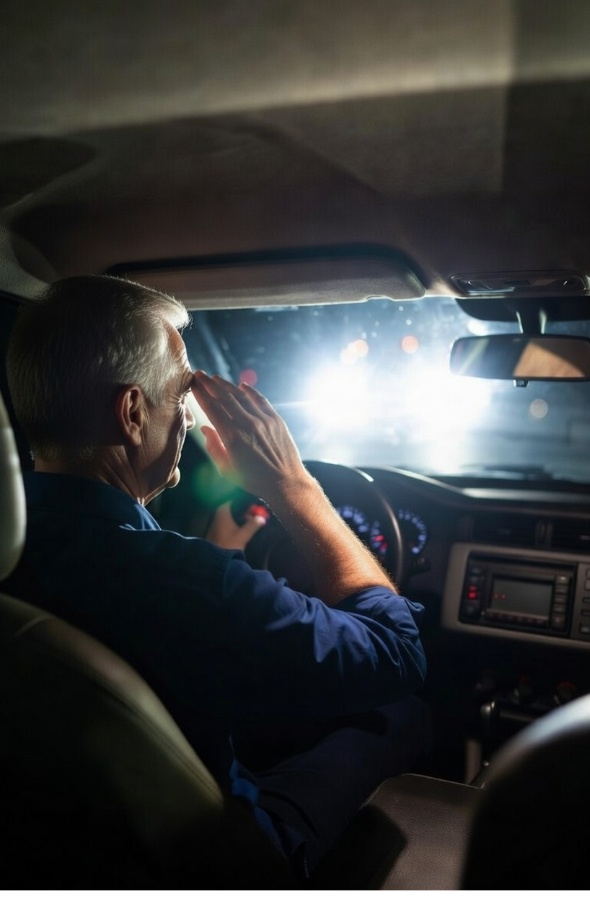
Oncoming headlights feel blinding rather than helpful
The road briefly disappears after cars pass
Glare lingers longer than expected
Confidence fades, even on familiar routes
This isn’t limited to older drivers.
It isn’t explained by a single diagnosis.
And it isn’t simply “the way it’s always been.”
The night has changed.
Over the past decade, vehicle headlights have become brighter, whiter, and more sharply focused. LED and HID systems project intense light farther down the road, with colour temperatures closer to daylight.
Why This Affects Everyone
Night glare is often framed as an aging issue. That explanation doesn’t hold up.
Younger drivers experience it.
People with healthy eye exams report it.
Professional drivers describe the same fatigue.
Glare overwhelms human visual processing regardless of age.
Short-wavelength white light scatters inside the eye, reducing contrast and delaying recovery. When this happens repeatedly, the eyes never fully settle into night adaptation.
This isn’t personal failure.
It’s environmental overload.
What “Being Blinded” Actually Means
Most drivers don’t lose sight completely.
Instead, they experience:
Reduced contrast
Blurred edges
Washed-out shadows
Delayed recovery after light exposure
The road remains visible — but not reliably readable.
That uncertainty is what creates strain and erodes confidence.
It’s environmental overload.
What Helps
There is no single fix. There are reliable ways to reduce the impact of headlight glare.
Using gaze strategies that protect central vision
Tracking road edges instead of staring into light
Setting up the vehicle to support night vision
Pacing driving to allow visual recovery
Choosing routes and timing that reduce exposure
The most effective changes come from understanding how vision works at night — and driving in ways that support it.
The Full Guide
If you’re looking for a calm, complete resource, the book Blinded at Night gathers this understanding into one place.
Many people have been adapting to night driving quietly, without language for what they’re experiencing.
Once something is named clearly, it becomes manageable.
The night doesn’t need to be mastered.
It needs to be met.
Why This Page Exists
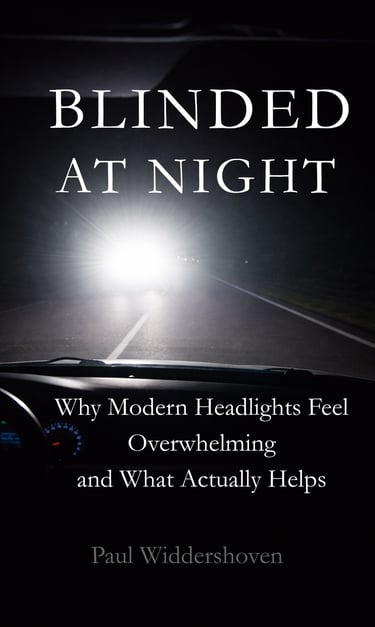
Why Modern Headlights Feel Overwhelming at Night— and What Actually Helps
It covers:
What changed on the road
How human night vision works (plain language)
What to do when facing headlight glare
How to set up your car for night driving
Driving rhythms that reduce strain
When tools like night driving glasses help — and when they don’t
How to choose when to drive without shame
At the same time:
Vehicles became taller
Traffic density increased
Headlight alignment tolerances narrowed
Glare events became more frequent
Human vision, however, did not change.
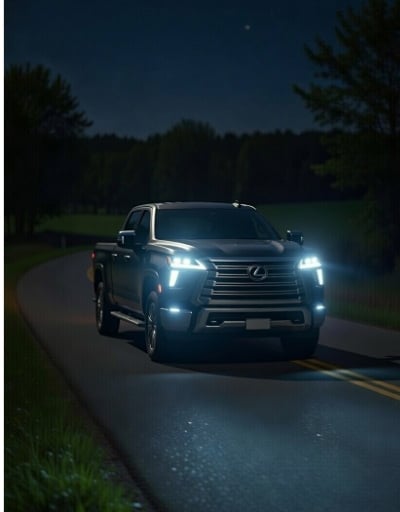
Our eyes are designed for gradual shifts in light — not repeated bursts of concentrated brightness in darkness.
For many drivers, the result is not total blindness, but momentary loss of usable vision.
Why This Affects Everyone
Stay Informed
Get tips and updates on night driving safety
Blinded at Night
Explore our sleek website template for seamless navigation.
Contact
Newsletter
info@email.com
123-123-1234
© 2024. All rights reserved.