Modern LED Headlights and Night Driving Glare Explained
Why oncoming headlights feel blinding at night — and what helps
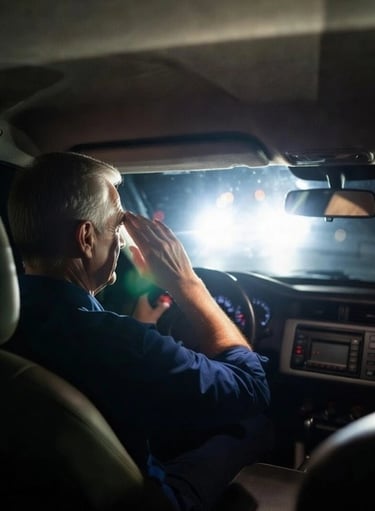
If you feel blinded by headlights at night, you’re not imagining it.
Many drivers report that modern LED headlights create intense night driving glare, especially from oncoming traffic.
Common experiences include:
Oncoming headlights feel blinding rather than helpful
The road briefly disappears after vehicles pass
Bright white or blue-toned light causes lingering glare
Recovery time feels slower than it used to
Confidence shifts, even on familiar roads
This isn’t limited to older drivers.
It isn’t explained by a single diagnosis.
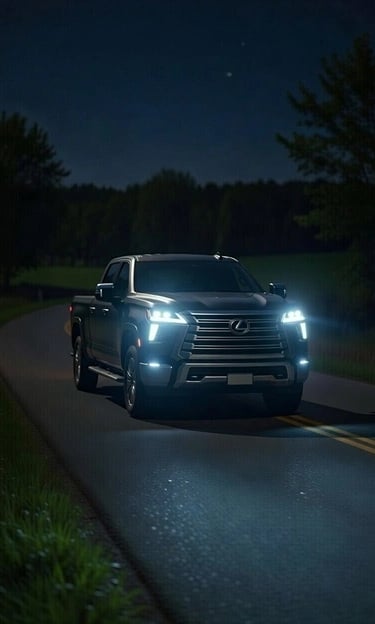
Modern headlights have changed significantly over the past decade.
They are brighter, whiter, and more sharply focused than traditional halogen systems.
The night driving environment itself has changed.
If driving at night has become harder than it used to be, you’re not imagining it.
Many people describe the same experience:
Oncoming headlights feel blinding rather than helpful
The road briefly disappears after cars pass
Glare lingers longer than expected
Confidence fades, even on familiar routes
This isn’t limited to older drivers.
It isn’t explained by a single diagnosis.
And it isn’t simply “the way it’s always been.”
The night has changed.
What "Being Blinded" Actually Means
Most drivers don’t lose sight completely.
Instead, they experience:
Reduced contrast
Blurred edges
Washed-out shadows
Delayed recovery after light exposure
The road remains visible — but not reliably readable.
That uncertainty is what creates strain and erodes confidence.
It’s environmental overload.
What Helps
There is no single fix. There are reliable ways to reduce the impact of headlight glare.
Using gaze strategies that protect central vision
Tracking road edges instead of staring into light
Setting up the vehicle to support night vision
Pacing driving to allow visual recovery
Choosing routes and timing that reduce exposure
The most effective changes come from understanding how vision works at night — and driving in ways that support it.
The Full Guide
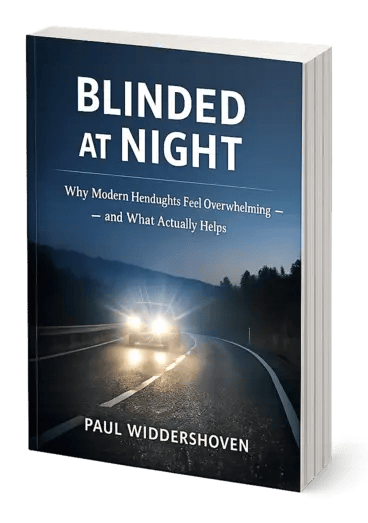
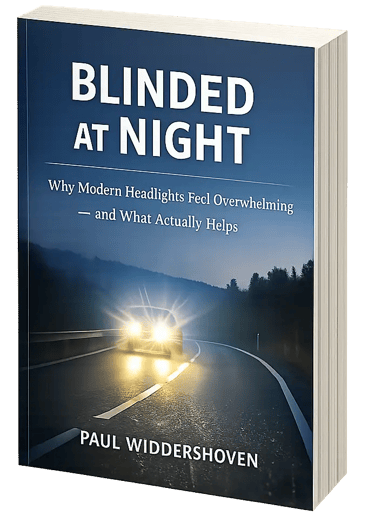
If you’re looking for a calm, complete resource, the Blinded at Night book gathers this understanding into one place.
It covers:
What changed on the road
How human night vision works (plain language)
What to do when facing headlight glare
How to set up your car for night driving
Driving rhythms that reduce strain
When tools like night driving glasses help — and when they don’t
How to choose when to drive without shame
The most effective changes come from understanding how vision works at night — and driving in ways that support it.
Understanding Makes It Manageable
Night driving glare feels overwhelming because it interrupts how human vision adapts to darkness.
Once it’s understood clearly, it becomes something that can be worked with — not fought against.
You don’t need perfect vision to drive at night.
You need awareness of how light behaves.
What Actually Changed
Blinded by Headlights at Night? You’re Not Imagining It
Blinded at Night
Why Modern Headlights Feel Overwhelming at Night— and What Actually Helps
About
Support
Privacy
Terms & Conditions
© 2026. All rights reserved.
Get tips and updates on night driving safety
Stay Informed